A pool opening checklist is a step-by-step guide to getting your swimming pool ready to use after the winter. It includes removing covers, testing equipment, circulating water, cleaning, testing water, balancing chemicals, and conducting safety inspections to ensure your pool is swim-season-ready.
Key Takeaways:
- A pool opening checklist helps move your pool from a winterized state to swim-ready water in the correct order.
- An above-ground pool opening checklist and an in-ground pool opening checklist share core steps, but equipment access and inspection requirements can differ.
- Pool opening chemicals should be added based on water testing, not guesswork.
- Green pool water after opening usually indicates algae, poor circulation, low sanitizer levels, debris, or unbalanced water.
- Professional swimming pool opening services are useful when there are leaks, pump issues, heavy algae, damaged liners, or unclear water chemistry.
What Is a Pool Opening Checklist?
A pool opening checklist is a predefined set of activities used to clean a swimming pool after winter closure. It involves inspecting the pool cover, water level, equipment, plumbing, filter, water chemistry, and safety conditions before anyone swims.
A swimming pool opening checklist helps homeowners avoid missing any steps. A pool may appear prepared when it is uncovered, yet there may be hidden issues with the pump, filter, liner, plumbing, or chemical balance. At Cracknell Pools & Backyards, we provide pool maintenance and repair services to homeowners who want the opening handled with a thorough inspection rather than a trial-and-error approach.
How Do You Open a Pool Step by Step?
To open a pool, follow these steps: remove winter protection, turn on the circulation, clean the water, check the chemistry, and fix any equipment issues. The right order is to safeguard the pool system and give the chemicals a better opportunity to perform.
A practical opening pool checklist should include the following:
- Clear debris from the pool cover before removal.
- Remove, clean, dry, and store the winter cover.
- Inspect the pool liner, walls, coping, deck, ladders, and rails.
- Raise the water level to the proper operating height.
- Reconnect pump, filter, heater, chlorinator, salt system, plugs, and fittings.
- Prime and start the pump.
- Check for leaks, pressure problems, unusual noise, or weak flow.
- Brush walls, skim debris, and vacuum the pool.
- Test pH, alkalinity, sanitizer, stabilizer, and calcium hardness.
- Add pool opening chemicals based on test results.
- Run the filtration system until the water clears.
- Confirm the water is balanced and visibly safe before swimming.
Pro tip: Do not put all the chemicals together at once without testing. The water balance is a process, rather than a dump-and-wait process.
Above-Ground Pool Opening Checklist vs. In-Ground Pool Opening Checklist
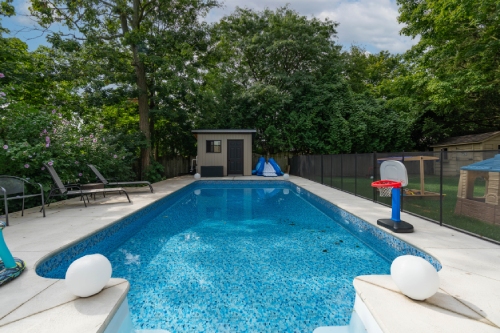
Most tasks on an above-ground pool opening checklist and an in-ground pool opening checklist are similar; however, equipment installation, fittings, plumbing, and structural testing may differ. Equipment for above-ground pools is typically more exposed than for in-ground pools, which may require more complex plumbing and built-in systems.
For an above-ground pool, inspect the wall, frame, liner, hoses, clamps, return fittings, skimmer, ladder, and base equipment. Freeze-thaw cycles can loosen fittings or the pool structure.
For an in-ground pool opening checklist, examine skimmers, returns, drains, coping, lights, the liner, safety cover anchors, the pump system, the heater, and pressure readings. In the case of a pool with a vinyl liner, wrinkles, tears, fading, or pulling around fittings may indicate the liner needs repair or replacement.
This is the fundamental notion: to inspect, circulate, treat, and swim once the water is clean, balanced, and safe.
What Chemicals Do I Need to Open My Pool?
The chemicals required to open your pool typically include chlorine or shock, a pH balancer, an alkalinity adjuster, a calcium hardness treatment, a stabilizer, and, in some cases, an algaecide or clarifier. Treatment varies depending on test results and the pool’s condition. The CDC states the typical recommended pool range is 1–4 ppm chlorine, 3–8 ppm bromine, and pH 7.0–7.8.
Common opening chemicals include:
- Chlorine or pool shock for sanitation.
- pH increaser or decreaser to correct acidity.
- Alkalinity increaser to stabilize pH.
- Calcium hardness treatment to protect surfaces and equipment.
- Cyanuric acid stabilizer for outdoor chlorine protection.
- Algaecide if algae risk is high.
- Clarifier if fine particles remain suspended.
Always keep pool chemicals separate in a bucket, and never assume chemical levels by simply looking at the water’s colour. First test, dose correctly, distribute to circulate, then retest. A pool opening company can measure the chemistry if you are not sure and prevent overcorrection.
Why Is My Pool Green After Opening?
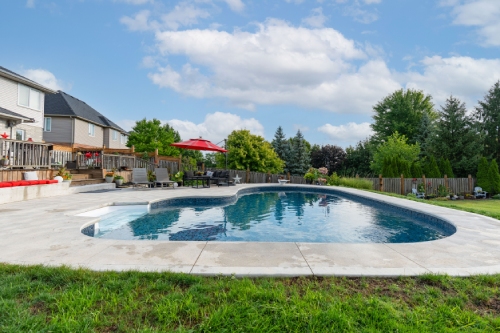
Your pool is green upon opening due to algae, either from growth during the closure or from insufficient sanitizer. Poor circulation, winter debris, clogged filtration, high phosphates, and unbalanced pH can also be sources of green water.
Having a green pool does not necessarily mean the pool is bad. It indicates that the water should undergo a controlled recovery process. Begin by removing debris, polishing surfaces, monitoring the pump and filter, testing the water, and adjusting the chemistry. Next, filter continuously until the water is clear.
Seek professional help in case the pool remains green despite being treated, water flow is low, pressure is irregular, or there are indications of leaks. Cracknell pool maintenance and repair services include pool opening and closing, leak and pressure testing, safety cover installation, equipment repair, and other seasonal services.
Can I Open My Pool Myself, or Should I Hire Someone?
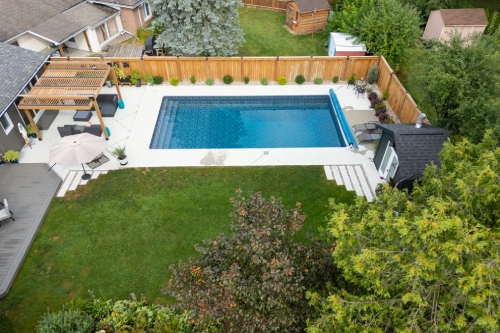
It is possible to open your pool on your own, provided the water is balanced, the equipment is operational, and you know how to balance the chemicals. When the swimming pool has leaks, pump problems, excessive algae growth, damaged liners, safety cover problems, or doubts about the system, then you should hire swimming pool opening services.
DIY is suitable for simple setups with experienced pool owners. The pool should be inspected, troubleshot, repaired, or brought to a swim-ready state more quickly, which is better performed by a professional.
Searches like “pool opening services near me,” “pool opening company,” and “pool opening company near me” usually come from homeowners who want the job done correctly without risking equipment damage or chemical mistakes. Cracknell Pools & Backyards serves London, Strathroy, St. Thomas, and surrounding areas.
Conclusion
Backyard pools remain a major part of Canadian home life. Statistics Canada reported 2,719 residential inground swimming pool permits across Canada from January through April 2024. A pool opening checklist will provide you with a safer, cleaner, and more reliable start to the swimming season. Primary procedures are not particularly difficult, though the details are important: before swimming, check the pool, turn on the equipment, test the water, balance the chemicals, and resolve any problems.
Cracknell Pools & Backyards is a local pool opening company that can assist homeowners with professional preparation of their pool at the start of the season, rather than guesswork. Contact us today to schedule swimming pool opening services and get your backyard ready for summer.
FAQs:
What chemicals do I need to open my pool?
Normally, you need chlorine or pool shock, a pH balancer, an alkalinity adjuster, a calcium hardness treatment, a stabilizer, and occasionally an algaecide or a clarifier. Water testing ought to provide the right chemical plan. Always test, treat sequentially, circulate the water, and retest before swimming.
Can I open my pool myself, or should I hire someone?
You can open your pool yourself, provided you are familiar with the equipment, the water is not highly contaminated, and you can test and maintain the chemical balance. Call in a professional for leaks, broken equipment, green water, liner problems, pumping problems, or pressure variations.
Why is my pool green after opening?
Your pool is green when it opens because algae grew while the pool was closed. The combination of low sanitizer levels, poor circulation, debris beneath the cover, warm weather, and unbalanced water can exacerbate the situation. Wipe off debris, brush surfaces, check the water, check the chemistry, and keep the filter running.
How long does it take to open a pool?
A simple pool opening can take several hours, whereas cleaning and balancing the water can take longer. When the pool is cloudy, green, or debris-filled, it might require a few days of filtration, cleaning, and chemical balancing before it is safe to swim.
Can you swim right after a pool opens?
No, you cannot immediately open and swim unless the water is clear and circulating and the chemical balance is proper. Ensure that the sanitizer, pH, alkalinity and visibility are within safe levels. If the pool was shock-tested, wait until the test results indicate the water is safe to swim in.