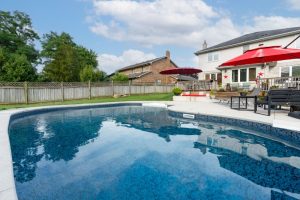
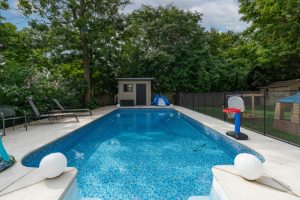
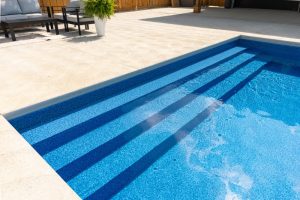
For Ontario homeowners comparing vinyl pools vs. concrete pools in 2026, vinyl is often the more practical choice when predictable cost, a smooth interior, and straightforward future renewal matter most, while concrete offers greater custom-shape flexibility and a long-lasting, highly durable structural shell. The better choice depends on your property, budget, design priorities, and long-term maintenance expectations.
A vinyl liner pool is a swimming pool whose waterproof interior is a fitted vinyl membrane supported by the pool structure, while a concrete pool uses a reinforced concrete shell with a cement-based or aggregate interior finish.
KEY TAKEAWAYS
- Vinyl pools typically cost less to build initially and use a replaceable liner as the waterproof interior surface.
- Concrete pools offer some of the greatest freedom for highly custom shapes and structural features, but their interior finish requires ongoing surface maintenance.
- Ontario’s freeze-thaw conditions make proper construction, drainage, winterization, and water management important for either pool type.
- A 10-year ownership comparison should include the initial build, liner or surface renewal, maintenance, repairs, winterization, and surrounding backyard work.
What Makes Vinyl Pools The Dominant Choice In Ontario’s Climate
Vinyl pools fit many Ontario backyards because they combine a durable structural system with a smooth, replaceable interior liner. For homeowners who want a comfortable swimming surface, a relatively efficient installation process, and a clear path to refreshing the pool later, that combination can be very practical.
Cold winters do not make pool maintenance free. Proper closing, drainage, groundwater management, and spring start-up still matter. The advantage of a vinyl system is that the liner serves as the waterproof finish and can be replaced without rebuilding the entire pool. If you want to see how Cracknell Pool approaches in-ground and on-ground vinyl pool installation, that service page outlines the type of projects we handle across southwestern Ontario.
Vinyl also gives homeowners substantial design flexibility. Modern liners come in many colours and patterns, and the pool can be integrated with steps, patios, fencing, sheds, and other backyard features. That matters when your goal is not simply to add water to the yard but to build a space that feels finished and easy to live with.
How Concrete Pools Compare on Durability and Long-Term Maintenance
Concrete pools are highly durable and can be shaped with a level of customization that few other pool types can match. Their trade-off is the interior surface: plaster and other cementitious finishes are wear surfaces that require attentive water chemistry, regular cleaning, and eventual renewal.
A concrete pool is not inherently harder to own, but its maintenance profile is different. The surface is typically more porous than a vinyl liner, so brushing and chemical control can be more important. In a cold climate, good construction and winterization are essential because moisture, ground movement, and repeated freeze-thaw cycles can expose weaknesses in any pool or surrounding hardscape.
The concrete shell itself can last for decades when properly designed and maintained. The finish should be treated as a separate component with its own service life. That distinction is important when homeowners compare ‘durability’, because a long-lasting shell does not mean the interior surface will never require maintenance.
Quick comparison
| Factor | Vinyl pool | Concrete pool |
|---|---|---|
| Initial build | Generally lower | Generally higher |
| Interior surface | Smooth vinyl liner | Plaster or aggregate finish |
| Future renewal | Replace the liner | Resurface the interior finish |
| Design flexibility | Many shapes and features | Maximum custom-shape freedom |
| Surface care | Smooth, non-porous liner | More brushing and surface-specific care |
Cost Differences Between Vinyl and Concrete Over a 10-Year Ownership Period
Over a 10-year ownership period, vinyl often starts with a lower construction cost, while concrete usually requires a larger upfront investment. A fair comparison is not the installation price alone; you should include planned surface renewal, routine care, repairs, seasonal opening and closing, equipment, and any backyard work required to complete the project.
For vinyl, the major long-term line item is the liner. Latham, a major pool manufacturer, notes that many in-ground vinyl liners last roughly 8 to 12 years, with longer life possible under favourable conditions and with proper care. That means a homeowner planning a 10-year budget should at least allow for the possibility of a liner replacement near the end of that period.
Concrete has a different cost curve. You may avoid liner replacement, but the interior finish may eventually require repairs or resurfacing, and the timing varies with the finish, water chemistry, climate exposure, and maintenance. Highly custom concrete construction can also add labour and schedule complexity before the pool is ever filled.
Before comparing quotes, separate the pool itself from excavation conditions, access, permits, fencing, decking, landscaping, and equipment. Our guide on how much it costs to install a pool is a useful companion, as site-specific items can affect the total project cost regardless of shell type.
Which Pool Type Suits Your Backyard Size, Soil Conditions, And Lifestyle
The right pool type is the one that best fits your site and lifestyle. Backyard access, slope, soil, groundwater, property setbacks, drainage, desired pool shape, and the amount of surrounding construction can all affect what is practical and what it costs.
Concrete is especially strong when the design requires unusual geometry, integrated structural features, or a highly customized architectural result. Vinyl is well-suited to many standard and semi-custom residential designs and can be a very efficient choice when you want a polished backyard without incurring the higher build costs of a custom concrete shell.
Your lifestyle matters too. If you want a pool that feels comfortable underfoot and whose interior can be visually refreshed with a liner replacement, vinyl has a clear advantage. If a one-of-a-kind shape is the primary goal and you are comfortable with a more involved surface-maintenance plan, concrete may be worth the added investment.
A site assessment should come before a recommendation. Cracknell Pool’s pool installation and renovation work considers the pool alongside the surrounding backyard, so access, patios, fencing, drainage, and other practical details can be planned as a single project rather than as separate surprises later.
Making the Final Decision: Questions to Ask Your Pool Builder Before Committing
Choose between vinyl and concrete only after the builder explains how each option fits your property, budget, schedule, and maintenance expectations. A trustworthy recommendation should be specific to your backyard and should make future costs as clear as the initial quote.
- What pool structure and interior system are included in the quote, and what is excluded?
- How will the design account for soil conditions, groundwater, drainage, slope, and access?
- What maintenance should I expect during a normal Ontario swim season and winter closing?
- Which components are likely to need renewal during the first 10 to 15 years?
- What workmanship and manufacturer warranties apply, and what could void them?
- Who is responsible for permits, inspections, fencing coordination, and site restoration work?
- How will changes or unexpected site conditions be communicated and priced before work begins?
If a builder cannot explain those points in plain language, keep asking questions. Our guide on how to choose the right pool builder can help you evaluate reliability, scope, and communication before you commit.
Frequently Asked Questions
How long does a vinyl pool liner typically last before needing replacement?
A quality in-ground vinyl pool liner typically lasts 8 to 12 years, though careful water chemistry, proper installation, sun exposure, winterization, and usage can shift that timeline in either direction. Some liners last longer under favourable conditions. Rather than relying solely on age, watch for signs such as fading, brittleness, stretching, leaks, or recurring fit problems that signal the liner is nearing replacement.
Can a vinyl pool be converted to a concrete pool at a later date?
Yes, but it is usually a major reconstruction rather than a simple conversion. A concrete pool requires its own engineered shell and interior finish, so switching from a vinyl system can involve removing or substantially altering the existing pool structure, plumbing, deck, and surrounding work. If you think concrete may be a future goal, discuss it before the original build so you understand the cost implications.
Are concrete pools harder to maintain than vinyl pools in Ontario?
Concrete pools generally require more surface-specific maintenance than vinyl pools because their interior finishes are more porous and may need more frequent brushing, tighter chemical control, and eventual resurfacing. Ontario winters also make proper closing and freeze protection important for both pool types. The equipment system, pool size, landscaping, and how heavily the pool is used can affect day-to-day maintenance just as much as the shell material.
Which pool type holds its resale value better when the home is sold?
Neither pool type automatically guarantees better resale value. Buyers tend to respond to overall condition, appearance, operating costs, safety, and how well the pool fits the backyard and local market. A well-maintained vinyl pool with a newer liner can be more appealing than a neglected concrete pool that needs resurfacing, while a high-quality custom concrete pool can add strong visual appeal to the right property.
Conclusion
For most Ontario homeowners, the decision comes down to what you want the pool to do for your home over the next decade. Vinyl offers a strong balance of comfort, cost control, efficient installation, and a replaceable interior, while concrete earns its place when highly custom design is the priority and the additional maintenance is acceptable. The right answer should feel clear after a site assessment, not like a sales pitch. If you are planning a pool in London, Strathroy, St. Thomas, Sarnia, or a surrounding community, talk to a Pool Expert and get a clear recommendation for your property, schedule, and budget. Your Pool, Perfected.