Key Takeaways:
If you’re weighing a repair against a replacement, here’s what it really comes down to:
- A liner under 8 years old with a single, isolated issue is almost always worth repairing.
- Two or more warning signs (leaks, wrinkles, fading, brittleness) at once typically mean it’s time to replace.
- When repair costs approach 25–30% of the replacement cost, replacement is the smarter spend.
- Most quality vinyl liners last 10–15 years; harsh sun and heavy chlorine can shorten that.
- The best time to replace windows is from late spring to early fall. If we are redoing a liner, the work typically takes about a week or less, depending on the project scope.
Your pool’s vinyl liner is the single most visible part of your backyard investment, and the part most likely to dictate when your next big pool expense lands. So when you spot a small leak or notice a hole near the steps, the first reaction is often to reach for a patch kit. Sometimes that’s exactly the right call. Other times, you’re throwing good money at a liner that’s already on its way out.
This guide walks you through a clear framework for deciding when swimming pool liner repair is enough and when swimming pool liner replacement is the smarter long-term move. If you’ve already searched for “pool liner repair companies near me,” you’re probably still at the patching stage, but here’s how to know for sure before you spend a dollar.
Repair or Replace? The 30-Second Decision Framework
The quick rule of thumb: a liner under 8 years old with an isolated issue is a repair; a liner 10+ years old or showing multiple compounding issues is a replacement. Three factors determine which side of the line you’re on:
- Age of the liner: Under 8 years, vinyl still has flexibility and patches hold; past 10 years, the surrounding material is too brittle for repairs to last.
- Type and number of issues: One pinhole is a repair. Fading + wrinkles + a leak together is a replacement.
- Cost ratio: Once repair costs approach 25–30% of a full replacement, you’re better off putting that money toward a new liner with a 10–15-year lifespan.
These three factors come into focus once you know what symptoms to actually watch for.
What Are the Top Signs You Need a New Pool Liner?
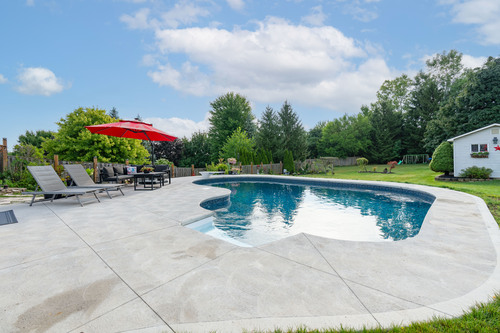
There are a few tell-tale signs that your pool liner needs replacing, and when two or more of these appear, it’s no longer economical to repair. Here’s what to look out for next time you inspect your pool.
Persistent Water Loss
In summer, a pool will lose a quarter-inch of water a week to evaporation. More than that, particularly if you’re having to top up every few days, indicates a leak. The real issue is when you fix one leak, and the water level still drops. This means the liner has several leaks, and it’s not worth the time and money to chase pinholes on an old liner.
Fading and Bleaching
Years of chlorine, salt, and UV exposure slowly strip the colour and pattern from vinyl. “Manufacturers and maintenance people recommend a chlorine concentration between 1.0 and 3.0 parts per million (ppm). This range is high enough to kill microorganisms, but low enough that it won’t lead to rapid fading of a liner” (CFFA).
Faded liners aren’t a structural failure in and of themselves, but they’re a clear visual sign that the material is wearing out. Once the pattern is lost, the liner becomes thinner, drier, and more prone to ripping.
Wrinkles That Keep Returning
Wrinkles in a vinyl pool liner should not be brushed back into place. If a wrinkle can be moved with a brush, it may mean there is water behind the liner, which should be inspected before it causes more damage. In most cases, wrinkles are corrected using vacuum power to pull the liner back into position. If the wrinkles keep returning, the vinyl may have stretched beyond its elastic limit and may no longer sit properly against the walls or floor. This can create pockets where water collects behind the liner and speeds up damage.
Slipping Out of the Track
The top of your liner is held in a groove around the coping. If you notice the liner sagging, pulling away, or popping out of the track, the material has shrunk or lost its elasticity. Putting it back in gives you a few more weeks of swimming, not a few more years.
Brittleness and Cracking
Feel the liner around the steps, returns, skimmer, and main drain. If the liner is stiff or has hairline cracks, the plasticizers that make it flexible have migrated.
Stubborn Staining
Organic (leaves, algae) and metallic (iron, copper) stains typically respond to chemical cleaning. When they no longer respond, the liner’s surface has worn to the point that the stains have penetrated the vinyl. At this stage, cleaning will not restore the appearance.
When these add up, swimming pool liner repair is only kicking the can down the road.
What Pool Liner Replacement Actually Costs
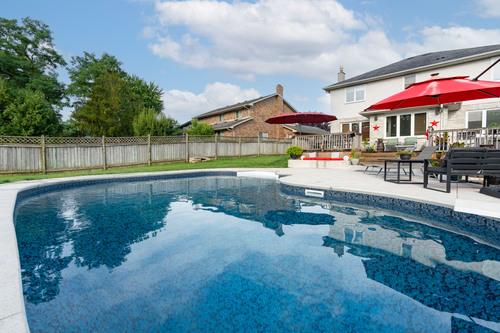
Swimming pool liner replacement cost depends on several factors:
- Pool size and shape: Larger pools and irregular shapes require more material and more fitting.
- Liner thickness: 20-mil is average; 28-mil is more expensive but more durable and puncture-resistant.
- Pool bottom condition: If the floor or walls need repair, that’s more time and money.
- Refill and re-balance: Filling and balancing a pool is not free.
- Compare that to repair: a patch costs $150-$400, but if you’re patching twice a year or fixing leaks, the numbers add up.
The break-even point is usually clear once a contractor inspects the pool — which is why most reputable pool liner repair companies will give you an honest repair-vs-replace recommendation, not just sell you a new liner.
When Is the Best Time to Replace a Pool Liner?
The best time to replace a pool liner in Ontario is late spring (April-May) or early fall (September-October).
- Spring (April-May) — The liner goes in cleanly into a new, dry pool, and you have a full season to enjoy it.
- Fall (September-October) — Contractors are less busy, prices are lower, and the pool is ready to go in May.
- Don’t wait until July or August — The busy season means longer wait times, rushed work, and a backyard you can’t enjoy during the hottest part of the year.
- Book 6–10 weeks ahead — Quality installers fill their season early; homeowners who wait until the leak gets bad usually lose the spring window.
How Do You Choose the Right Pool Liner Pro?
When you search for “pool liner replacement near me,” here’s what separates a good crew from a cheap one:
- Installers trained by the manufacturer — They know the brands they install, and their work qualifies for the full warranty.
- Inspects before quoting — A good installer will inspect the pool wall and floor before quoting, not just measure and order.
- Supervisor on site during installation — A decision-maker stays on the job, not a drop-off-and-leave crew.
- Insured and full-service — They can do other work (coping, light replacement, plumbing fittings) while they’re there, so you don’t have to juggle multiple trades.
Cracknell Pools & Backyards has been replacing liners across London, Strathroy, and St. Thomas since 2015, and we treat every replacement as a chance to fix the small stuff beneath the surface while the pool is open.
Conclusion
When it comes to replacing a pool liner, you don’t have to play the guessing game. If your liner is less than 8 years old and you have a single problem, a repair will likely fix it. But if you’re seeing several signs of trouble, such as leaks, fading, wrinkles, or brittleness, or if your repair costs are approaching one-third of the cost of replacement, it’s time to start thinking about replacing your liner. A new liner gives you a 10–15-year reset for your pool’s appearance, watertightness, and peace of mind.
Not sure which side of the line your pool is on? Book a free on-site assessment with Cracknell Pools & Backyards. We’ll inspect your liner, walls, and pool bottom, and give you a straight answer on whether it’s a repair job or a replacement.
FAQs:
Can you repair a pool liner?
Yes, small holes, pinholes, and minor tears can be repaired with a vinyl repair kit (above or below water). But repairs are most effective on liners less than 8 years old and made of flexible vinyl. Older liners tend to fail because the vinyl becomes stiff.
How long does it take to replace a pool liner?
For an average residential inground pool, a complete liner replacement will take 2-4 days from start to finish (drain to refill) — roughly a day to remove the old liner and prepare the pool, half a day to install the new liner, and 1-2 days to fill and balance the water.
How often do you have to replace a pool liner?
The average lifespan of a quality vinyl liner is 10-15 years. Excessive chlorine, hard water, and intense sunlight can reduce that to 8-10 years. High-end liners (28-mil) installed by a professional crew can approach the higher end.
Does homeowner’s insurance cover pool liner replacement?
Generally not, most policies exclude wear and tear and deterioration. Accidental damage (a tree falling, vandalism) may occur. Always check with your insurer before assuming.